Templates
A template is a reusable experiment configuration. It stores everything an experiment does - the type, the interface settings, the instructions, the language, even datasets - but it is never launched and never collects ratings. Create experiments from a template when you run the same kind of study repeatedly and want each one to start from the same configuration.
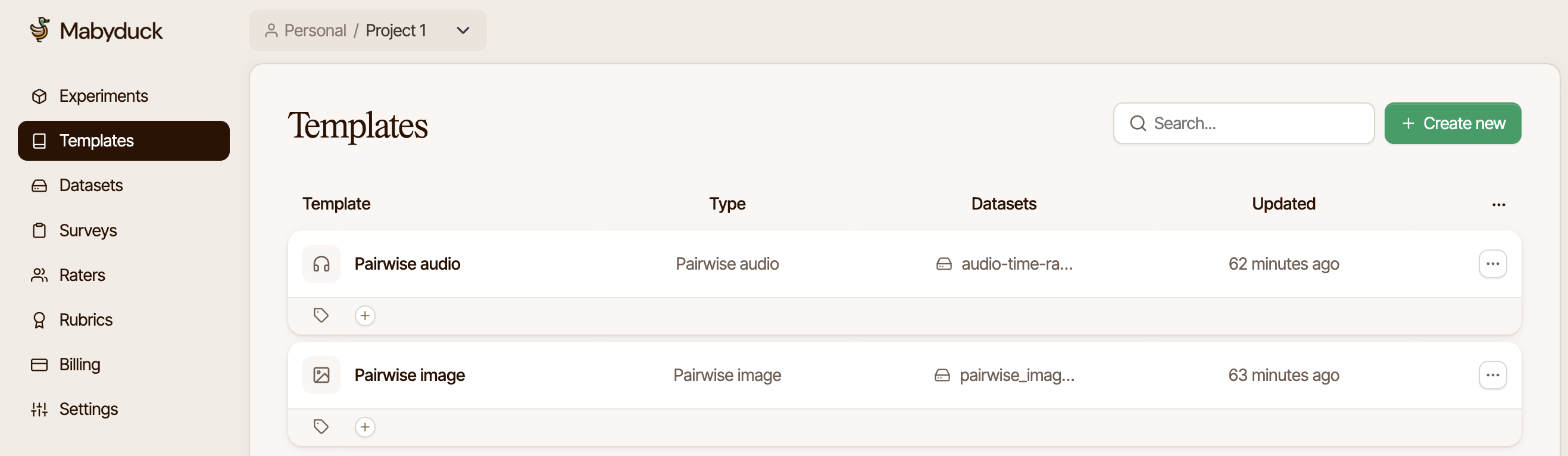
Create a template
There are two ways to make one.
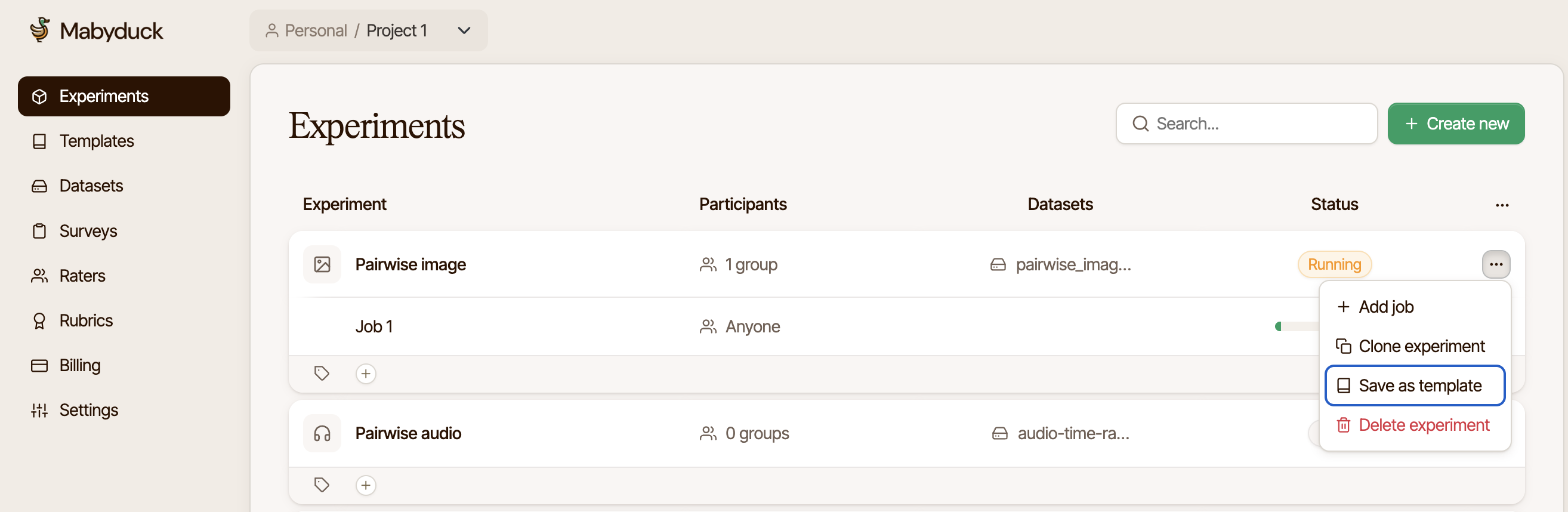
From scratch. Open Templates and choose Create new. The flow is the same three steps as creating an experiment - pick a type, configure the interface, save - except that choosing datasets is optional.
From an experiment you already have. Open the experiment's action menu and choose Save as template. This copies the experiment's configuration into a new template and leaves the original experiment untouched.
Datasets are optional
An experiment needs datasets because it has something to rate. A template does not, so you can leave them out and choose them each time you create an experiment. A template with no datasets reports Chosen at use
Adding datasets to a template is still useful when every experiment made from it evaluates the same material - a fixed reference set, for example, or a golden dataset used to check rater quality. Datasets on a template carry over to every experiment created from it, and you can replace them per experiment.
Create an experiment from a template
Open a template and choose Use, or pick Use template from its action menu. This opens the experiment configuration step pre-filled from the template. Nothing is created until you save, so you can adjust anything first - including the name and the datasets.
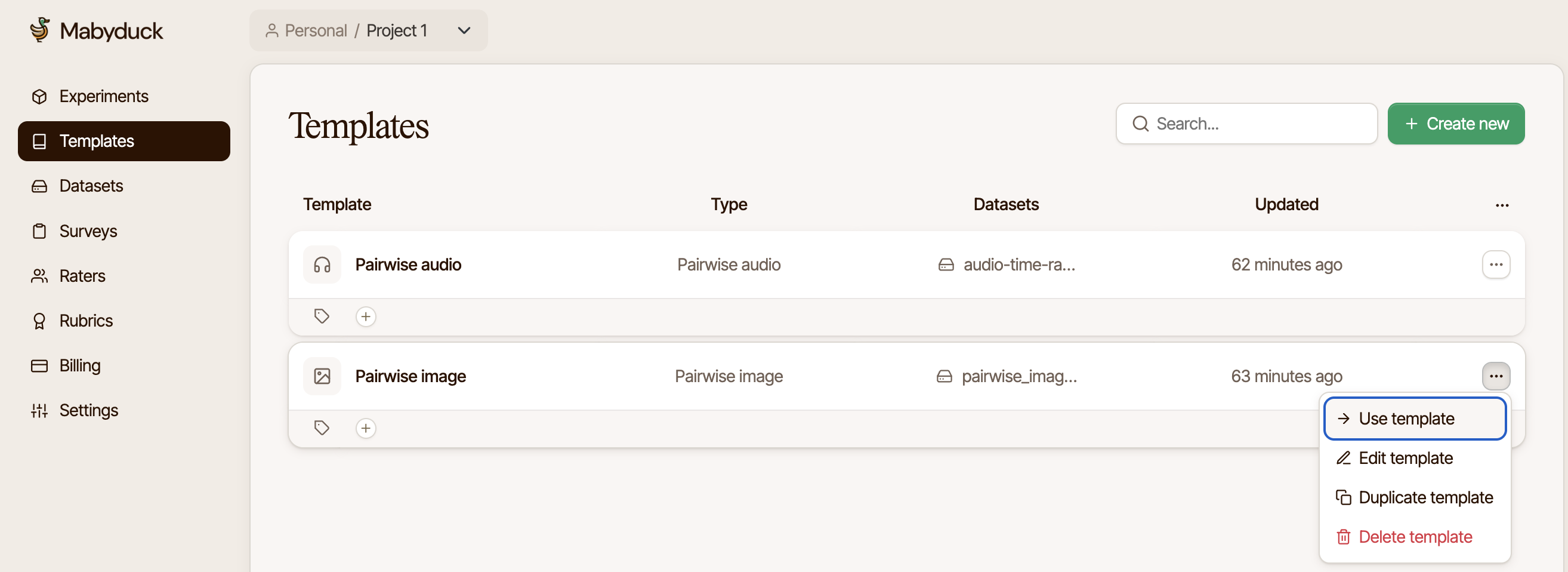
What carries over: the type, the language, the interface configuration, the title, question, description and introduction, the hero media and caption, the tags, and all three sets of datasets. What does not: jobs, sessions and results, which belong to the experiment you create and never to the template.
Editing a template afterwards does not change the experiments already created from it. Each experiment is an independent copy.
Related resources
- Experiment types - choosing and configuring an experiment type
- Templates via the API - creating and using templates programmatically
- Template API reference - endpoints and schemas